Cat Litter
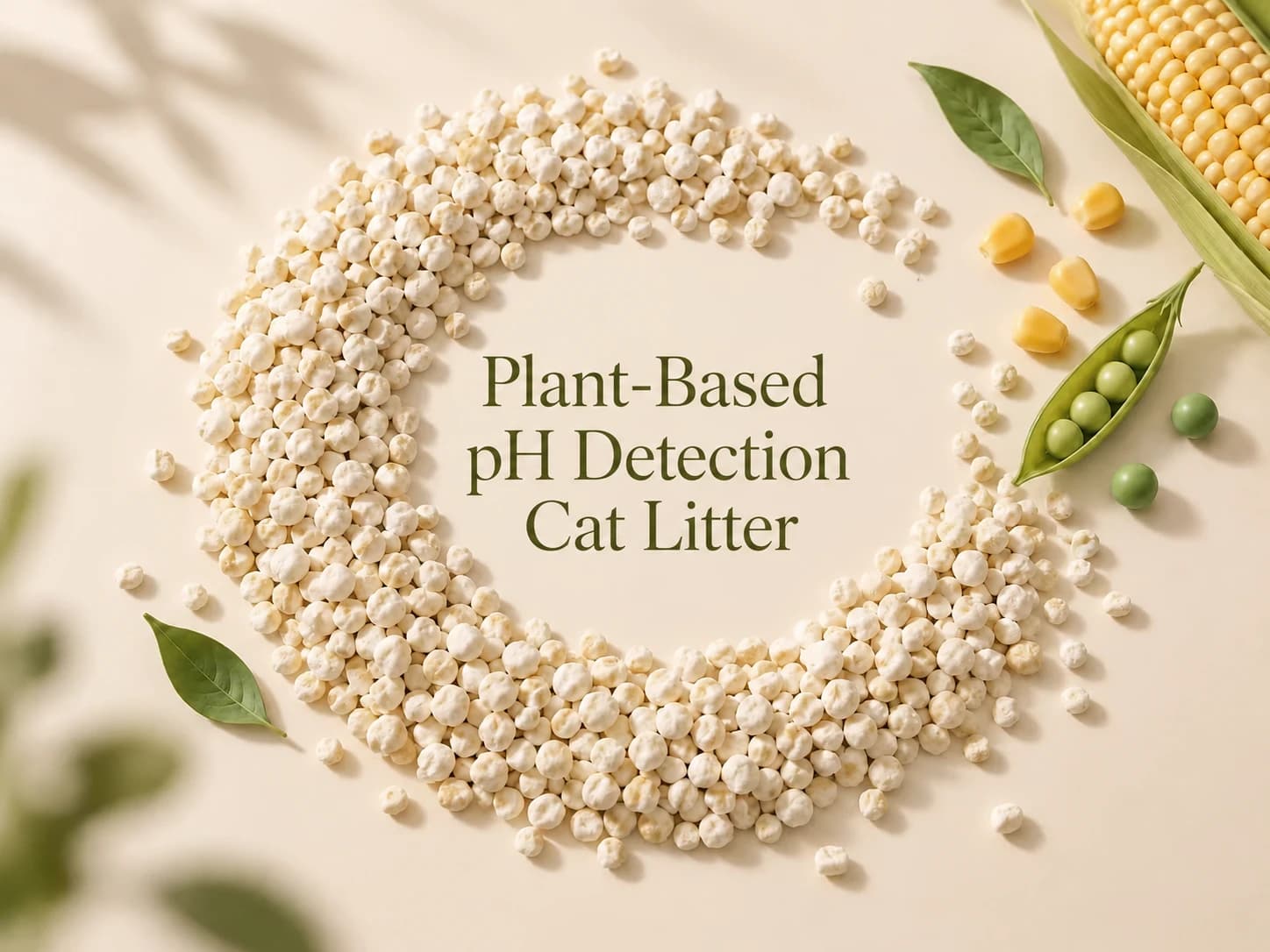
Plant-Based pH Detection Cat Litter
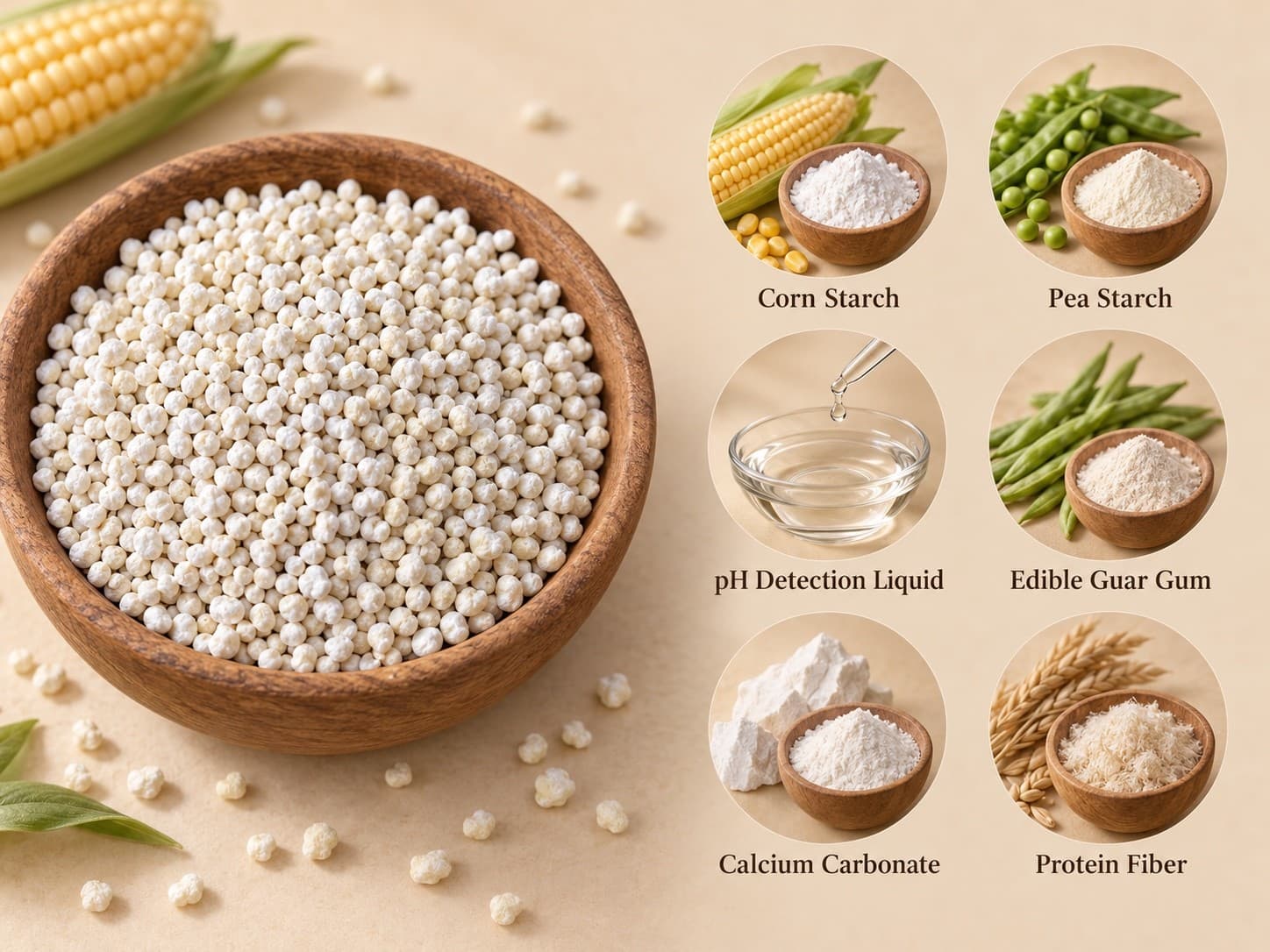
A layer of pH-monitoring granules you sprinkle over your cat's regular litter, made from corn starch, pea starch, edible guar gum, calcium carbonate, and protein fiber. The granules shift color as a simple visual trend to watch over time — for monitoring only, not a diagnostic or medical device.
Specifications
- Weight
- [Placeholder] 6 kg
- Ingredients
- Corn starch, pea starch, guar gum, calcium carbonate, protein fiber
- Scent
- [Placeholder] Unscented
- ✓[Placeholder] Free shipping over $75
- ✓[Placeholder] 30-day returns
- ✓[Placeholder] Ships in 1-2 business days
Why you'll like it
Color-changing pH indicator
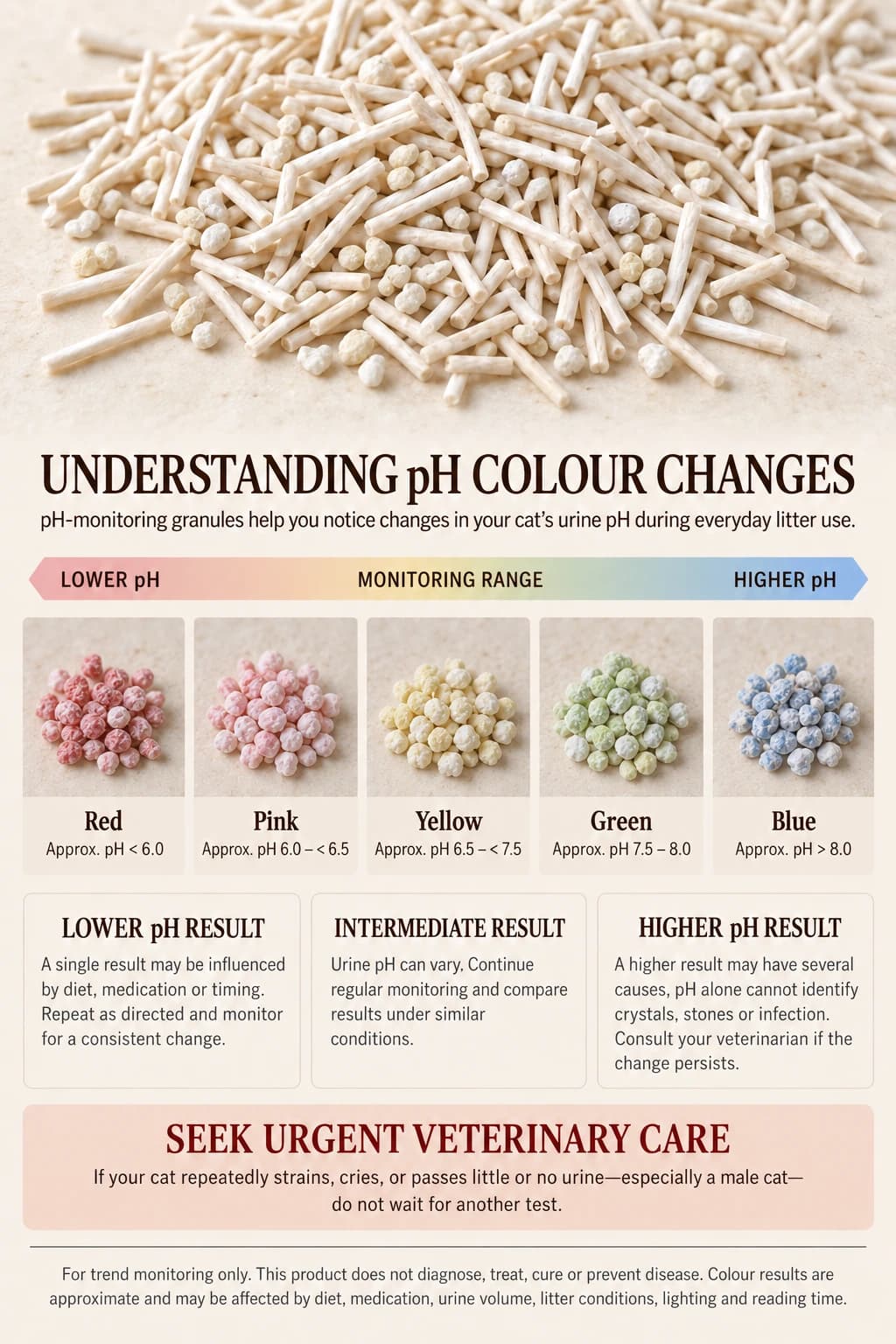
Granules shift from red through pink, yellow, green, to blue as urine pH trends higher, giving you a simple visual cue to watch — see the FAQ below for what each color range means.
100% plant-based ingredients
Made from corn starch, pea starch, edible guar gum, calcium carbonate, and protein fiber — no clay or bentonite.
Sprinkle on top, no habit changes
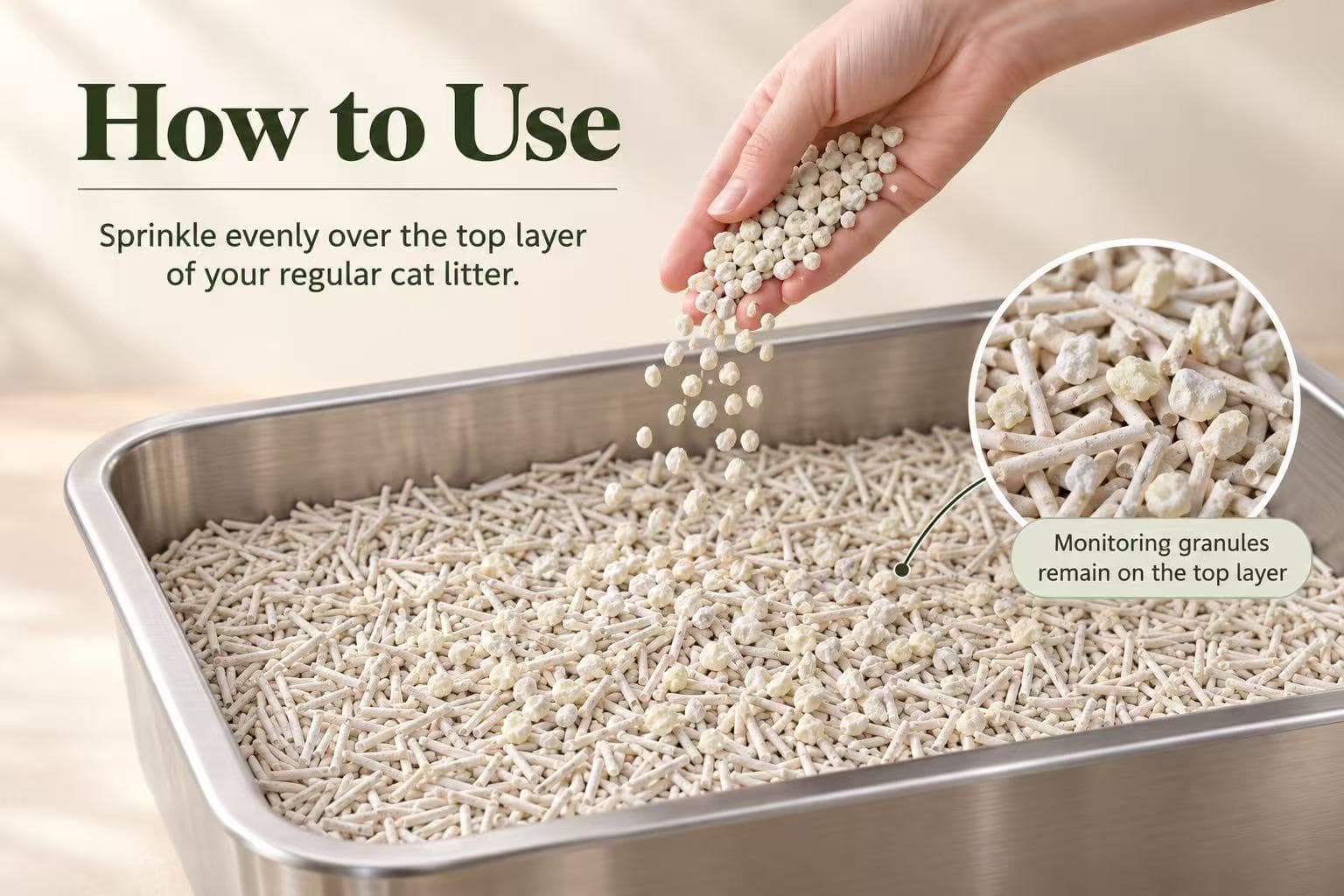
Sprinkle evenly over the top layer of your regular litter — the monitoring granules stay on top where they're easy to see and scoop.
Ingredients & how to use
Frequently asked questions
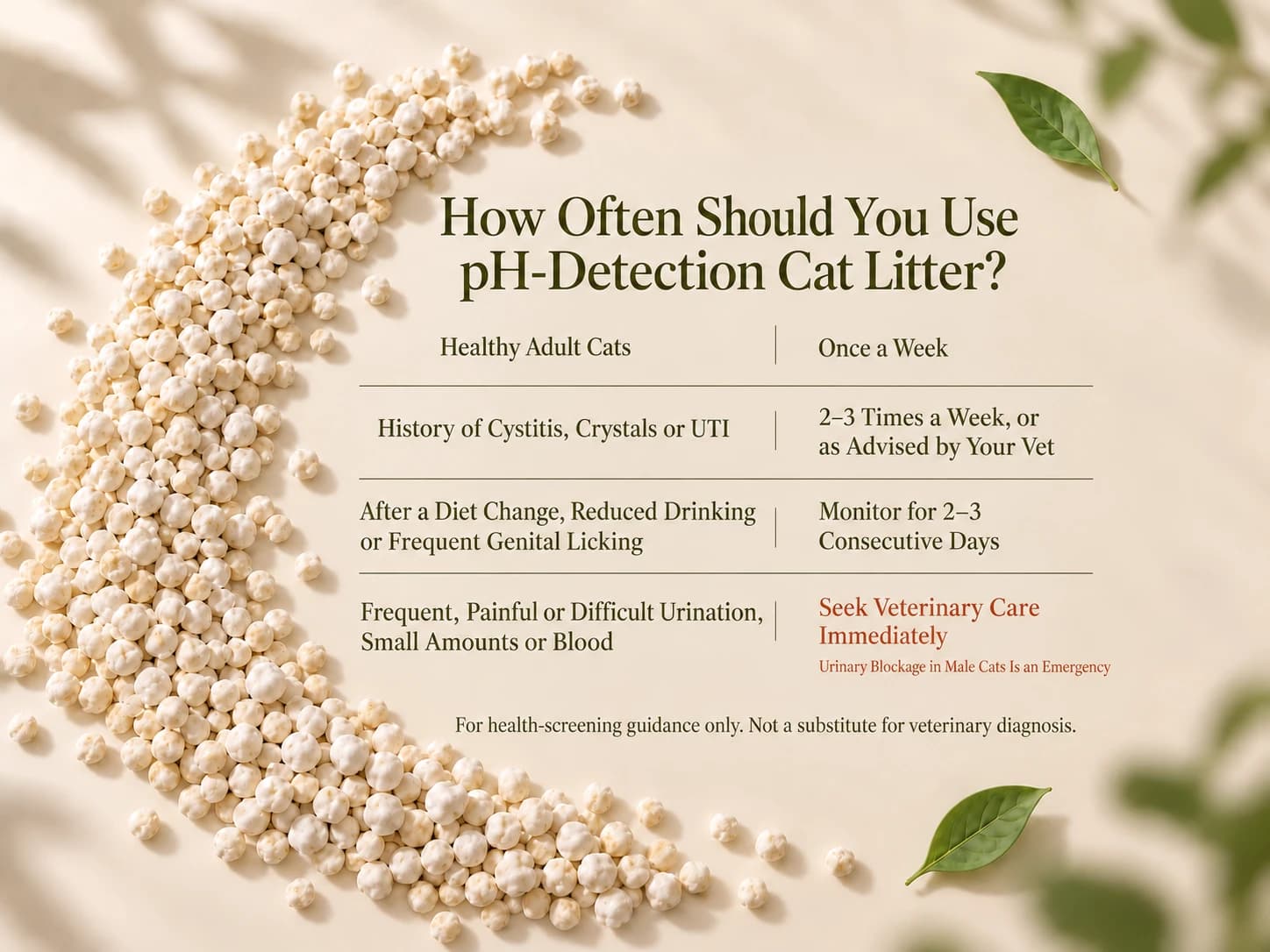
The granules shift color to reflect approximate urine pH: red (below 6.0), pink (6.0–6.5), yellow (6.5–7.5, the typical monitoring range), green (7.5–8.0), and blue (above 8.0). This is for trend monitoring only — it does not diagnose, treat, cure, or prevent any disease, and results can be affected by diet, medication, urine volume, litter conditions, lighting, and reading time. A single unusual result can happen; repeat and monitor for a consistent change before drawing conclusions, and consult your vet if a change persists.